
Written by: Sonja Walker, Founder, Kids First Children’s Services
The night before an assessment, one question often comes up: how much should you tell your child?
Tell them too much and you may worry about making them anxious. Tell them too little and you may worry that they will feel confused when they arrive. Most families try to find a balance but are not always sure if they have got it right.
Preparing your child does not need to be complicated. Children usually cope better when they have a simple and honest idea of what will happen and know that there are no right or wrong answers. A calm conversation beforehand and keeping the day as normal as possible is often enough.
Whether your child is attending an assessment for learning difficulties, ADHD, autism, anxiety, or developmental concerns, a little preparation beforehand can help them feel calmer, more settled, and more ready to take part in the process.
What Happens During a Child Psychological Assessment?
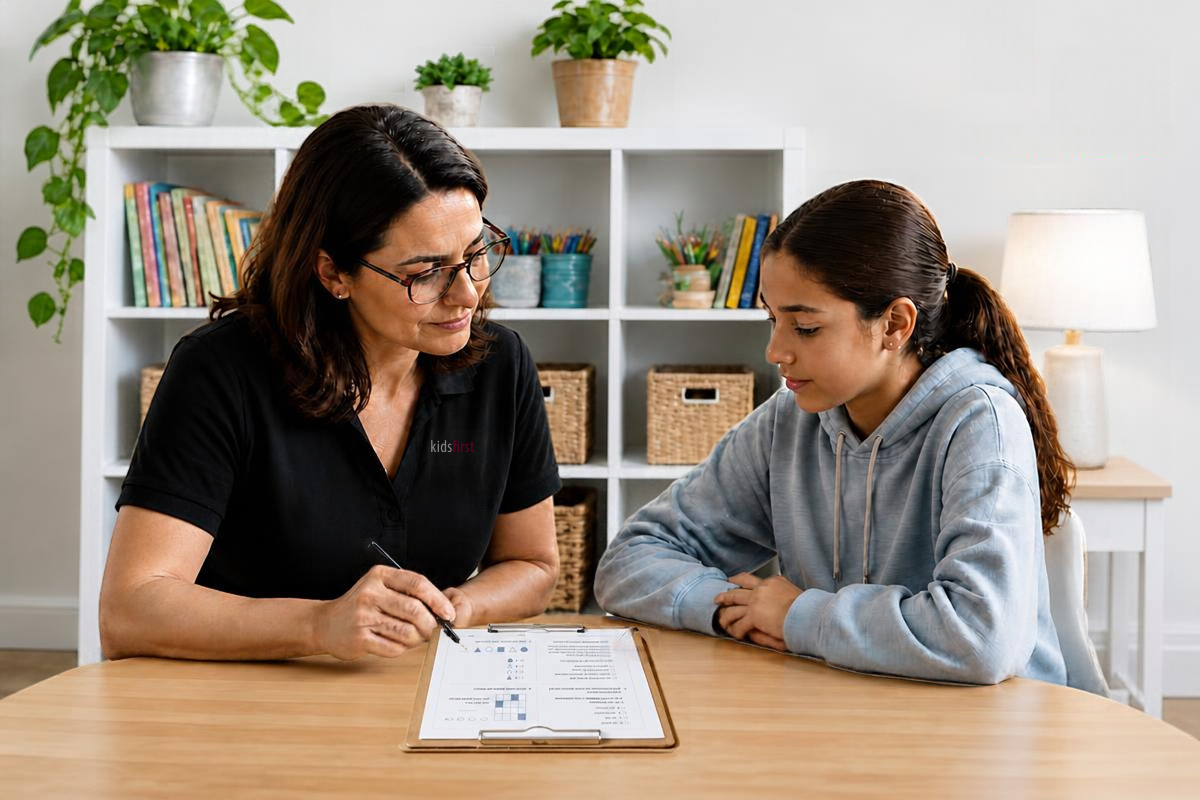
A child Psychological Assessment usually takes place across two to four sessions and may involve activities with the child, parent interviews, questionnaires, and information from teachers or other professionals. The exact process varies depending on the concerns being explored.
What Does the Assessment Process Look Like?
Depending on the reason for referral, children may take part in activities such as puzzles, drawing tasks, games, problem-solving activities, questionnaires, and guided conversations rather than formal examinations.
Information is also gathered from parents and, where appropriate, teachers or other professionals involved in the child’s care. This helps the psychologist gain a broader understanding of how a child is functioning across different settings, including home and school.
Most assessments also include a parent feedback session, where the findings and recommendations are discussed in plain language.
Why Does Preparation Matter?
Children who feel anxious or uncertain about an assessment may find it harder to engage naturally during activities and conversations. Some children become withdrawn, while others may try very hard to give the “right” answers.
Having a simple understanding of why they are attending and what the appointment may involve can help children feel calmer and more comfortable during the process.
Preparation is not about practising answers or encouraging children to perform in a particular way. The aim is simply to reduce uncertainty and help your child feel safe and supported throughout the assessment.
Talking to Your Child About the Assessment
How you talk about the assessment can have a significant impact on how your child feels about attending. In most cases, children cope better when they are given simple, honest information that matches their age and level of understanding. The goal is not to provide every detail, but to reduce uncertainty and reassure your child that they are not in trouble.
Use Simple, Age-Appropriate Language
One of the most common mistakes parents make is either saying too much or saying nothing at all. Children often notice when information is being kept from them, which can make them worry that something is wrong. At the same time, lengthy explanations or clinical terms can feel confusing and intimidating.
A simple and honest explanation is usually the best approach.
For younger children, you might say:
“We’re going to meet someone who likes talking and playing games with children. They want to learn more about the things you’re good at and the things that sometimes feel a little tricky.”
Older children and teenagers generally appreciate a more direct explanation. For example:
“We’re meeting with a psychologist who is going to help us better understand how you think, learn, and manage different situations.”
Answer Questions Calmly and Honestly
Children often take emotional cues from their parents. If you appear worried or avoid answering questions, your child may become more anxious about the appointment.
If your child asks whether it will hurt, reassure them that they will mostly be talking, doing activities, answering questions, and possibly playing games. If they ask whether they are in trouble, explain that nobody is in trouble and that the assessment is simply there to help everyone understand things better.
It is completely normal for children to feel a little uncertain before attending an assessment. Reassuring your child and giving them a basic idea of what to expect can help them feel more comfortable on the day.
Practical Ways to Prepare Before the Appointment
A few simple steps beforehand can help the appointment feel more familiar and reduce some of the uncertainty many children experience before attending.
Visit the Clinic Beforehand
If your child has not visited the clinic before, it may help to show them the location ahead of time. Even a short visit to see the building, entrance, or waiting area can make the environment feel less unfamiliar on the day.
This can be particularly helpful for children who experience anxiety, sensory sensitivities, or find changes in routine challenging.
Keep the Day as Normal as Possible
Try to keep your child’s routine as normal as possible on the day of the assessment. An unusual breakfast, repeated discussions about the appointment, or constant reassurance can sometimes make the day feel more significant or worrying than it needs to be.
A good night’s sleep, a proper breakfast, and enough time to get ready without rushing can help children feel more settled and ready to participate.
Avoid Practising Questions or Answers
Some parents understandably want to prepare their child by looking up assessment activities or rehearsing possible questions. However, Psychological Assessments are intended to provide an accurate picture of how a child typically thinks, learns, and responds in everyday situations.
For this reason, it is best to avoid coaching or practising answers beforehand. Children do not need to study or prepare for the appointment. Simply encouraging them to do their best and reassuring them that there are no right or wrong answers is usually enough.
Preparing Children of Different Ages for an Assessment
Children of different ages often have different concerns about attending a Psychological Assessment. Adjusting your explanations to match your child’s developmental stage can help them feel more comfortable and reduce unnecessary worry.
Preparing Children Aged 2 to 6
Young children usually understand the world through play and familiar experiences rather than lengthy explanations. Simple descriptions and role-play can therefore be helpful.
You might pretend to visit a “helper” at home by taking turns doing puzzles, answering simple questions, or looking at pictures together. Presenting the appointment as an opportunity to play games and meet someone new is often more effective than giving detailed explanations.
At this age, many children are also concerned about being separated from their parents. Reassure your child that you will be nearby and let them know what to expect when you arrive at the clinic.
Families of younger children may also wish to explore early intervention services if developmental concerns are identified during or following the assessment.
Preparing Children Aged 7 to 12
Primary school children often ask more specific questions and may worry about getting answers wrong or being judged.
Reassure your child that there are no right or wrong answers and that the assessment is not an exam. You may find it helpful to give them a simple idea of what the appointment could involve, such as remembering information, looking at pictures, answering questions, or completing puzzles and activities.
Providing a brief overview beforehand can help children feel more prepared without encouraging them to rehearse or study for the appointment.
Supporting Teenagers Aged 13 to 17
Teenagers may have concerns about being labelled or worry that attending an assessment means something is “wrong” with them. It is important to acknowledge these feelings rather than dismiss them.
An open and honest conversation about why the assessment has been recommended can often be helpful. Emphasise that the purpose of the assessment is to gain a better understanding of their experiences and identify strategies or supports that may make everyday life easier.
Many adolescents appreciate being included in discussions and decision-making throughout the process. Framing the assessment as an opportunity to learn more about themselves, rather than as a judgment or diagnosis, can help reduce resistance and encourage engagement.
What to Bring to the Assessment
Bringing a few familiar items and any relevant background information can help the appointment run more smoothly and provide the psychologist with a better understanding of your child’s experiences and history.
Relevant Documents and Information
If available, bring any documents that may assist the assessment process. This may include previous school reports, earlier assessments, reports from speech pathologists or occupational therapists, and any relevant medical information.
Although much of this information is often collected through intake forms before the appointment, additional documents can still be helpful, particularly those that provide information about your child’s developmental history, learning progress, or previous supports and interventions.
Comfort Items and Snacks
For younger children, a familiar item from home can make an unfamiliar environment feel more comfortable. A favourite toy, stuffed animal, blanket, or water bottle may help some children feel more settled during the appointment.
Assessments can also be mentally tiring, particularly for younger children or those attending longer sessions. Bringing a drink or snack for afterwards and planning something enjoyable following the appointment can help children finish the day on a positive note.
Supporting Your Child Emotionally on the Day
How parents respond before and after the appointment can have a significant impact on how children feel about the assessment experience. Small moments of reassurance and encouragement can help children feel safe and supported throughout the day.
Stay Calm and Reassuring
Children are often highly aware of their parents’ emotions. If they notice that you seem particularly worried or stressed, they may begin to feel anxious themselves.
Try to approach the day in a calm and reassuring way. This does not mean pretending that everything is perfect or forcing yourself to appear overly cheerful. Instead, focus on creating a sense of safety and normality for your child.
Many parents understandably feel nervous before an assessment. Reminding yourself that the appointment is intended to provide greater clarity and guidance for your child can sometimes help ease some of these concerns.
Praise Their Effort Rather Than the Outcome
After the assessment, focus on acknowledging your child’s effort and cooperation rather than discussing performance or possible results.
Simple comments such as:
“You did a great job today.”
or
“I’m proud of how you gave things a go.”
can help reinforce that the assessment was not a test that they could pass or fail.
Planning something enjoyable afterwards, such as visiting a park, having their favourite lunch, or spending some quiet time together at home, can also help end the day on a positive note and make any future appointments feel less intimidating.
What Happens After the Assessment?
The period after an assessment can bring a mixture of emotions for families. Some parents feel relieved to have more information, while others may need time to process the findings and consider the next steps.
Receiving the Report and Feedback
Once the assessment sessions have been completed, the psychologist spends time reviewing the information gathered, interpreting the results, and preparing a detailed report.
Families are then invited to attend a feedback session where the findings are discussed in plain language. This appointment provides an opportunity to ask questions, discuss any concerns, and better understand what the results may mean for your child at home and at school.
Most assessments involve 2 to 4 sessions with the child, alongside a parent consultation and teacher questionnaires. Reports are usually available around 3 weeks after testing is completed. Families can generally expect the overall process to take around 4 to 8 weeks. It’s worth letting your child’s teachers know ahead of time, as delays in returning questionnaires can sometimes affect the timeline.
If further services or supports may be beneficial, these options can also be discussed during the feedback session, including ongoing psychology support and any relevant funding pathways or rebates where eligible.
Talking to Your Child About the Results
How you share the findings with your child will depend on their age, maturity, and individual circumstances.
For younger children, simple and reassuring explanations are usually most appropriate. You might focus on the idea that everyone has things they find easy and things they find more difficult, and that the assessment has helped adults better understand how to support them.
Older children and teenagers often appreciate being included in discussions about the findings. For some young people, having an explanation for difficulties they have been experiencing can bring a sense of relief and help them better understand themselves and their experiences.
Whatever the outcome, it is important to emphasise that an assessment does not change who your child is. Instead, it provides information that can help families, schools, and professionals make informed decisions about future supports and strategies.
Speaking With the Kids First Team
If you are feeling unsure about whether your child may benefit from an assessment, or you are uncertain about where to begin, please feel welcome to reach out to our team.
Families often contact us with questions long before they are ready to book an appointment. Whether you have noticed changes in your child’s learning, behaviour, emotions, or development, or are simply looking for some guidance, we are always happy to talk through your concerns and discuss the options available.
Seeking an assessment can sometimes feel like a big step, and it’s completely okay to have questions or feel uncertain about what to do next. You do not need to navigate the process on your own. Please feel welcome to get in touch if you would like to talk through what you have been noticing or better understand the possible next steps for your child and family.
Kids First Children’s Services
Level One, 527 Pittwater Road (cnr Pine Ave),
Brookvale NSW 2100
Phone: (02) 9938 5419
Email: [email protected]
Frequently Asked Questions
Should I tell my child why they are having a psychological assessment?
Yes. Children generally cope better when they are given simple, honest information about why they are attending. The explanation should match your child’s age and level of understanding. Keeping the conversation open and reassuring can help reduce uncertainty and make the appointment feel less intimidating.
What if my child refuses to participate in the assessment?
It is not uncommon for some children to feel nervous, upset, or reluctant when attending an assessment. Psychologists are experienced in working with children who may need extra time to feel comfortable and will usually spend time building rapport before beginning any formal activities. If a child is too distressed to participate, alternative arrangements may sometimes be discussed.
Can I stay with my child during the assessment?
This depends on your child’s age, individual needs, and the type of assessment being completed. Parents may be present for part of the session with younger children, while older children often complete activities independently. Your psychologist will discuss what approach is likely to be most appropriate for your child.
Do I need a GP referral before booking an assessment?
No. A GP referral is not required to book an assessment at Kids First. However, referrals from a GP or medical specialist may be necessary to access Medicare rebates for certain assessment pathways. Our team can discuss your individual circumstances and any funding options that may be available.
How long does the assessment process usually take?
Most assessments involve two to four sessions with the child, alongside parent consultations and teacher questionnaires where appropriate. Reports are generally available around three weeks after testing has been completed. From the initial appointment to the feedback session, families can typically expect the process to take approximately four to eight weeks, depending on the type and scope of the assessment.
What if my child has already been assessed elsewhere?
Previous assessment reports can provide helpful background information and should be brought to your appointment if available. Depending on your child’s current needs, the psychologist can advise whether further assessment may be beneficial or whether existing information remains relevant.
Do I need to speak with my child’s school before the assessment?
You are not required to contact your child’s school before the assessment. However, teacher input is often helpful and may form an important part of certain assessments, particularly for ADHD and learning concerns. If information from school is needed, this will only occur with your permission.
How should I explain the assessment results to my child?
The way you discuss the results will depend on your child’s age and understanding. Younger children usually benefit from simple and reassuring explanations, while older children and teenagers may appreciate more detailed discussions. During the feedback session, your psychologist can also provide guidance on how to talk about the findings in a way that is appropriate for your child.