Written by: Sonja Walker, Founder, Kids First Children’s Services
Clinically Reviewed by: Rebecca King, Certified Practising Speech Pathologist
A speech and communication skills check before school shows whether your child is ready to talk, listen and learn in Kindergarten. A speech pathologist (often called a speech therapist) looks at your child’s speech, language and early literacy skills, so you can start the school year knowing they are ready or get some support in place early.
Kids First’s speech pathologists in Brookvale see many Northern Beaches families for speech therapy and school readiness checks in the months before school starts. Some parents have a specific worry. Others just want peace of mind. Both are good reasons to book a check.
Why speaking clearly matters in the classroom and playground
At school, children need to communicate on their own. There is one teacher for a whole class, and parents are no longer there to fill in the gaps or explain what their child means.
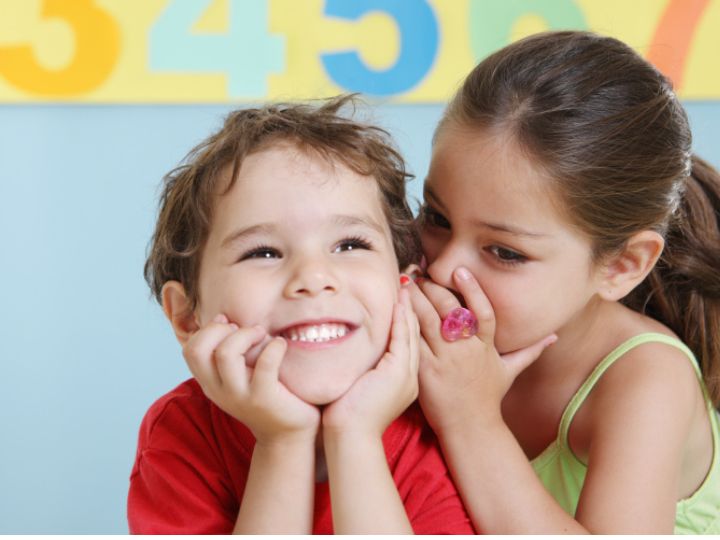
In the classroom, children need to ask for help, answer questions, share their news and tell the teacher when something is wrong. In the playground, they need to join in games, take turns in a conversation, sort out small disagreements and make friends.
When a child is hard to understand, or finds it hard to put their ideas into words, they can feel frustrated or start to hold back. Some children go quiet. Others act out. A speech pathologist can check how clearly your child speaks and how well they use words and sentences, so they can connect with other children and take part in learning.
Why understanding and remembering instructions matters at school
Talking is only half of communication. Children also need to understand what is said to them and remember it long enough to act on it.
A Kindergarten day is full of instructions given to the whole group. “Put your lunchbox in your bag, get your hat and line up at the door.” “Draw a picture of your family and write your name at the top.” Instructions like these have several steps and use words about order, position and time, such as first, before, after, under and next to.
A child who misses part of an instruction will often watch the other children and copy them. This can hide the difficulty for a while, so they look like they are keeping up. Over time, though, they can fall behind in lessons, miss the rules of a game in the playground, or seem like they are not paying attention when the real issue is understanding.
Understanding spoken language is called receptive language, and it is one of the things a Kids First speech pathologist checks before school. Receptive language difficulties are easy to miss at home, where routines are familiar and children pick up meaning from what is going on around them.
How speech sounds affect learning to read and spell
In Australian schools, the building blocks of reading and spelling start early in term one of the first year of school. Children are taught to listen for the sounds in words and link each sound to a letter, and they start using those links to read and write simple words within the first weeks.
To learn to read and spell, children need to hear the difference between sounds and say them clearly. A child who says “tat” for “cat” or “wabbit” for “rabbit” may also find it harder to work out which letter matches the sound they are hearing, and this can show up later in their reading and spelling.
Speech sounds develop gradually, so some sounds still being learned at five is normal. Sounds like “r” and “th” often take a little longer and can keep developing into the early school years. A speech pathologist knows which sounds are expected at your child’s age and which are worth working on now.
The skills that sit underneath reading are also worth checking. These include hearing rhymes, clapping the syllables in a word, and noticing the first sound in a word, such as hearing that “sun” starts with “s”. Speech pathologists call this phonological awareness, and it is one of the strongest early foundations for learning to read.
Signs it may be worth having your child’s speech and communication skills checked
Every child develops at their own pace, and many of these things on their own are nothing to worry about. If you notice a few of them, or you just have a feeling something is not quite right, a speech and communication skills check before school can help.
- People outside the family find it hard to understand your child
- Your child leaves sounds off words, swaps sounds, or has trouble pronouncing words
- They use short sentences, or find it hard to tell you about their day in order
- They often say “what?” or seem to forget instructions with more than one step
- They find it hard to answer questions like “why” and “how”
- They get frustrated or give up when they are not understood
- They are not yet interested in rhymes, or find it hard to hear the first sound in a word
- They stutter, or their words get stuck
- Their preschool or day care teacher has mentioned a concern
Your own instincts matter too. You know your child better than anyone, and noticing something is a good reason to ask.
What happens at a school readiness speech and communication skills check at Kids First
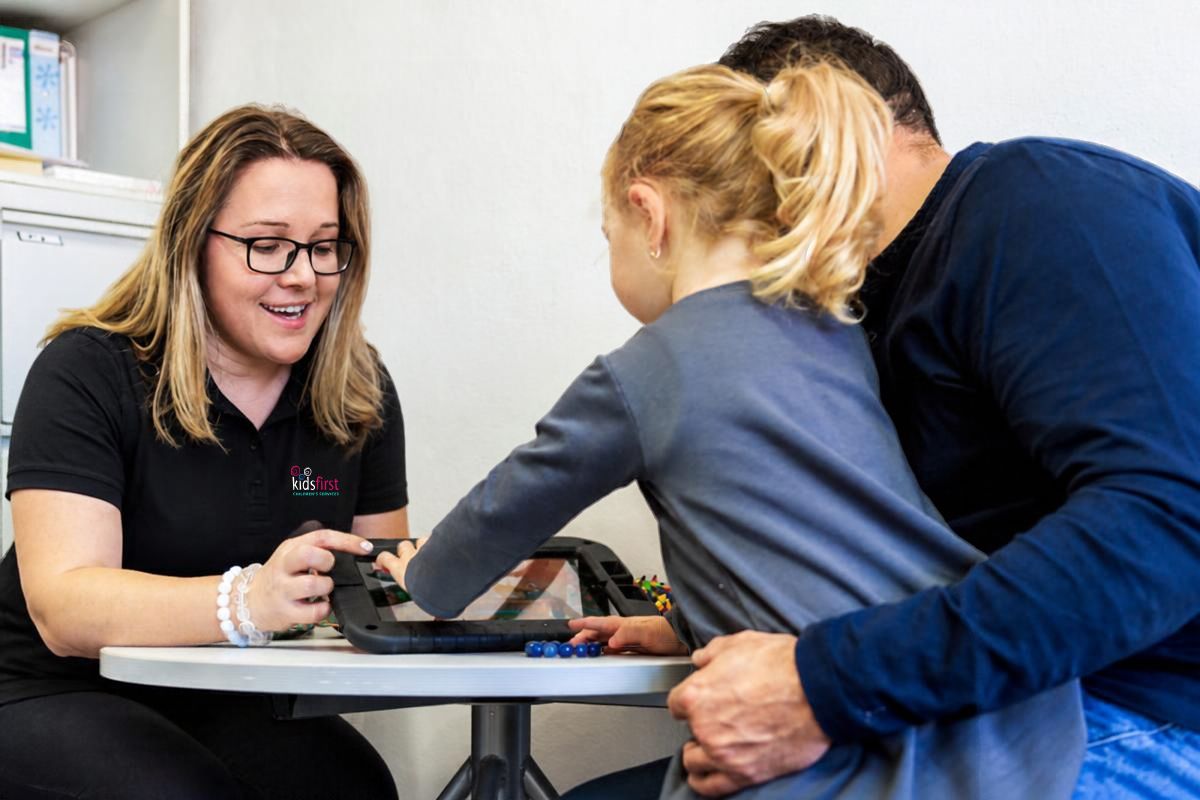
A speech and communication skills check at Kids First is relaxed and play-based, so most children enjoy it. Your child’s speech pathologist will play games, look at books and chat with your child while they check:
- How clearly your child says their speech sounds
- How well they understand words, questions and instructions
- How they put words together to share ideas and tell a story
- Early literacy skills like rhyming, syllables and first sounds
- How they use language socially, such as taking turns and staying on topic
Your speech pathologist will also talk with you about what you notice at home and any feedback from preschool. Afterwards, they will explain what they found in plain language and talk through what it means for starting school.
If your child is on track, you can start the school year with confidence. If some extra support would help, your speech pathologist will suggest next steps, which might be a short block of therapy, ideas to practise at home, or sharing information with your child’s school so their teacher can support them from day one.
Why now is a good time for a speech and communication skills check
The last term of preschool is a great time for a speech and communication skills check. It leaves time for a few therapy sessions before school starts if they are needed, and it means you can share useful information with your child’s new school before day one.
Checking speech and language before school means small difficulties can be supported while they are still small, so your child can focus on making friends and enjoying their first year of school.
Questions parents often ask about speech checks before school
When should my child see a speech therapist before starting school?
Many families book a speech and communication skills check in the year before school, often in the last terms of preschool. If you have a concern earlier than that, there is no need to wait, and a speech pathologist can see your child at any age.
Is a speech pathologist the same as a speech therapist?
Yes. In Australia the professional title is speech pathologist, but many parents use the term speech therapist, and both mean the same thing.
Will my child grow out of trouble pronouncing words?
Some speech sound errors are a normal part of development and resolve with time, while others need support to change. A speech pathologist can tell you which is which for your child, so you are not left wondering.
Do I need a referral to book a speech check at Kids First?
You can book a speech and communication skills check directly with Kids First Children’s Services by calling 9938 5419. The Kids First team can also talk you through funding options such as the NDIS or a GP plan.
Book a speech and communication skills check with Kids First
Kids First Children’s Services has supported families on Sydney’s Northern Beaches since 2007 and has helped more than 40,000 children, families and educators. The Kids First speech pathologists work alongside Kids First occupational therapists, psychologists and early intervention teachers, so your child can get the right support under one roof.
If you would like to know whether your child’s communication skills are ready for school, we would love to help. Call Kids First on 9938 5419 to chat with our friendly team or book a speech and communication skills check in Brookvale. You can also read more about speech therapy at Kids First.